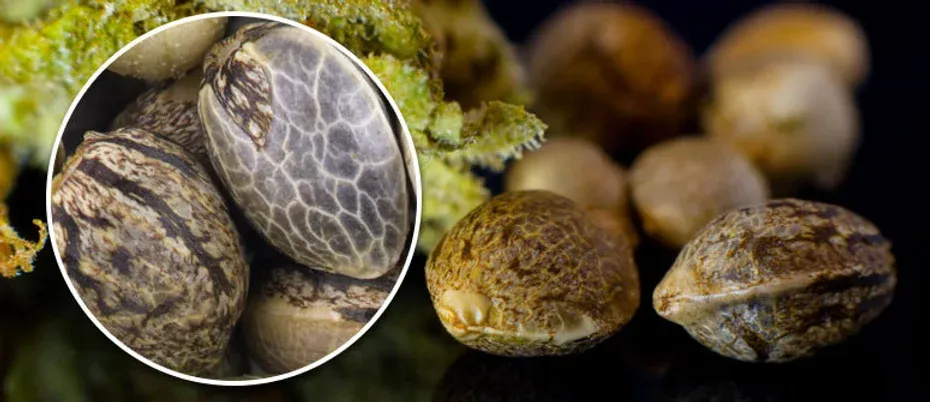
What does seed colour indicate?
A cannabis seed has surface markings that aren’t cosmetic. Growing medium colouration reveals maturity stage, genetic expression, and post-harvest storage conditions, which experienced growers assess before adding anything to the growing medium. Visual assessment is one of several physical checks used alongside shell firmness and exterior patterning to evaluate germination potential.
Mature cannabis varieties display colouration ranging from light tan through medium brown to deep brown with visible mottling or striping. gelato seeds fall within that range, typically expressing medium to dark brown tones with pronounced exterior patterning when genetics have fully developed. Pale green or white colouration on seeds from the same variety indicates embryonic development did not reach completion before harvest.
Visual assessment alone does not confirm viability. Inaccurate storage conditions can prevent germination of a mature specimen. Visual evaluations are best used as a first filter, followed by physical checks.
What do specific colours mean?
Variation across a batch communicates different things depending on where each specimen sits on the spectrum from pale to dark.
- Pale green or white – Immaturity indicator. Embryonic development did not complete before harvest. Germination rates fall well below those of mature brown specimens from the same batch.
- Light tan or beige – Sits at the lower maturity edge. Some light tan specimens germinate successfully, but rates drop compared to darker ones with visible exterior patterning. Soft shell texture alongside light colouration strengthens the immaturity reading considerably.
- Medium brown – Represents functional maturity across most cannabis varieties. Embryonic development has completed, and adequate stored energy exists for germination under correct conditions.
- Dark brown with mottling – Indicates full maturity and genetic expression. Exterior patterning appears more pronounced at this stage and correlates with higher germination rates across most variety types.
- Very dark or black – Requires closer assessment. Deep colouration points to full maturity in certain genetic lines but indicates age-related degradation or moisture damage in others. Shell firmness helps distinguish between the two readings.
- Uniform grey – Rarely indicates a viable specimen. Grey colouration across the entire exterior typically points to fungal exposure or prolonged moisture contact during storage rather than natural genetic variation.
Variation within single batches
Batch colouration differences are normal and do not indicate poor genetics. A single harvest from one plant produces specimens at slightly different maturity stages depending on where each one sat within the flowering structure. Upper canopy positions mature faster, producing visible tonal differences within the same genetic source.
Growing high-probability seeds separately from lower-probability seeds before germination allows growers to treat batches differently instead of identically.
Combining visual with physical checks
Visual evaluation works most accurately alongside two additional assessments.
- Shell firmness distinguishes mature specimens from immature ones that display brown colouration due to early drying rather than completed development. Applying light pressure between two fingers reveals whether the shell holds firm or compresses, with firm shells indicating structural integrity.
- Pronounced mottling or striping correlates with full genetic expression across most cannabis varieties. Specimens displaying strong exterior patterning alongside dark colouration and firm shell texture represent the strongest germination candidates within any batch, regardless of variety type.
Colouration provides the first layer of maturity information available before germination begins. Read alongside shell integrity and exterior patterning, it gives growers a reliable basis for prioritising which candidates from a batch are worth starting first.
